This guide explains how Spin Automatica systems support automated handling, throughput control, and consistent product presentation across production stages. Spin Automatica refers to industrial automation solutions used to synchronize mechanical actions with sensors, quality checks, and operator workflows. The article reviews how to evaluate suppliers, what to confirm during installation, and which requirements influence total cost and performance.
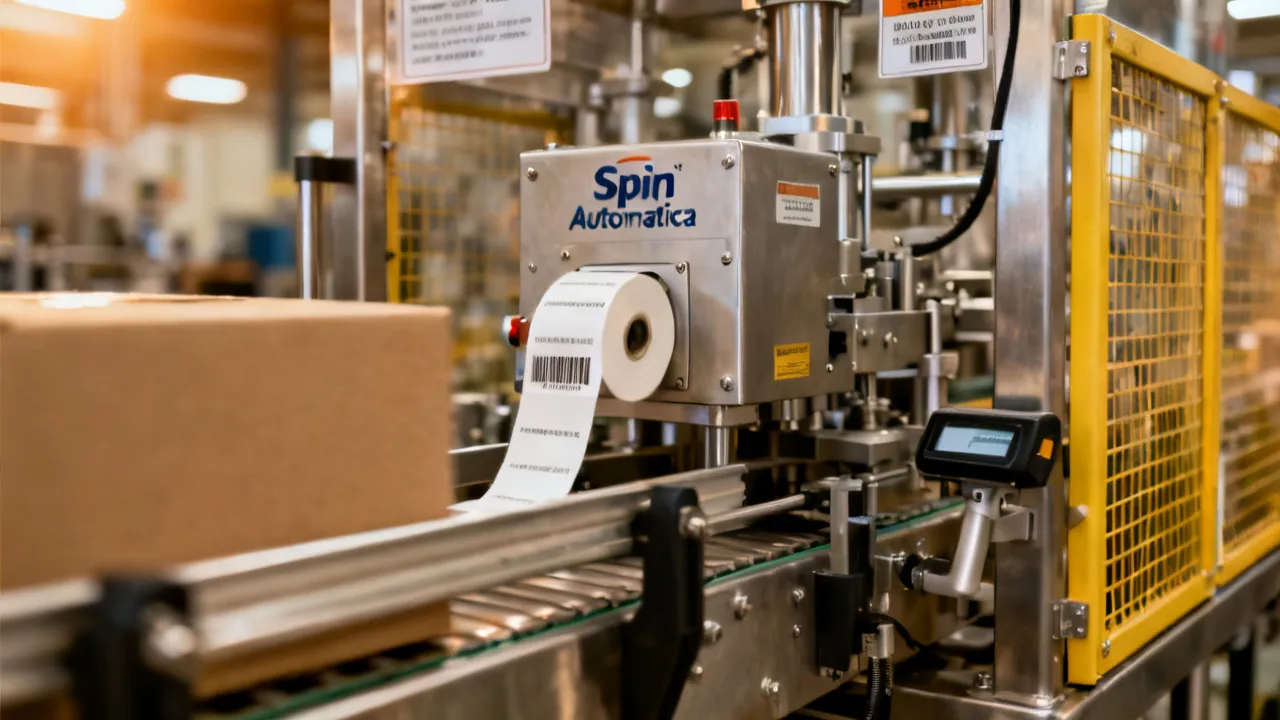
Spin Automatica is very valuable when your production priorities are repeatability, controlled motion, and stable integration with upstream and downstream equipment. In practical terms, a well-specified Spin Automatica setup helps standardize how parts are oriented, processed, and handed off—reducing variation that often appears when manual or semi-automated steps rely on operator timing, subjective judgment, or “best effort” adjustments. For decision-makers, the critical question is not just “what the machine does,” but how reliably it can coordinate with conveyors, feeders, vision checks, labeling, and reject/sort mechanisms while maintaining predictable cycle times.
When Spin Automatica is implemented properly, it becomes a control-and-handling “behavior anchor” in the line: upstream systems learn that parts will arrive at consistent states; downstream systems learn that parts will depart in consistent conditions; and quality systems learn that the timing, orientation, and inspection opportunities are stable. This affects both performance and people. Operators spend less time correcting inconsistent handling outcomes, and engineering spends less time chasing “random” defects caused by uncontrolled orientations or inconsistent transfer conditions.
From an operations and systems-integration perspective, Spin Automatica arrangements typically combine mechanical motion (e.g., spinning/turning/orientation functions), industrial controls, and safety interlocks. The biggest impact is usually seen in three areas: (1) improved consistency in handling, (2) easier quality traceability when sensors are integrated, and (3) clearer maintenance planning when components are standardized and documented.
To appreciate why it matters on a practical shop floor, consider the typical failure pattern in manual or lightly automated handling. Even if the “average” outcome looks correct, the line often sees occasional events: a part may be oriented upside down, tilted a few degrees off target, seated imperfectly, or transferred at the wrong moment relative to a downstream clamp or camera strobe. Each of those events may not happen frequently, but they are precisely the events that create rejects, rework, or downtime. Spin Automatica changes the probability distribution of those events by forcing motion and positioning to follow controlled logic under repeatable conditions.
In addition, a strong Spin Automatica design supports predictable timing—meaning that it can behave consistently during steady state and remain safe and deterministic when faults occur. Decision-makers should therefore evaluate not only best-case throughput, but also cycle-time behavior during minor upstream interruptions (brief stoppages, starved feeder moments) and downstream interruptions (packaging line stop, reject buffer full). The practical ROI often comes from the reduction of “tail events” that cause unplanned downtime and quality escapes.
Many factories approach automation as “buy a machine, install it, and run.” In reality, Spin Automatica implementations succeed when they are treated as a production system. The return on investment (ROI) depends on how the system is engineered around your product variety, changeover frequency, defect tolerance, and the operational reality of shift coverage, downtime response, and maintenance staffing.
While pricing can vary significantly by configuration (throughput targets, sensor packages, safety design, interfaces, and installation scope), buyers generally evaluate total cost of ownership rather than purchase price alone. Industry benchmarking frequently highlights that integration, training, spare parts strategy, and commissioning effort can materially affect delivered performance. A machine that reaches a target speed in a vendor demo may still underperform in your line if it cannot handle part variability, if communication timing is brittle, or if alarms do not guide maintenance correctly.
For credible reference points on automation benefits and implementation considerations, consult sources such as the International Federation of Robotics (IFR) and the World Economic Forum’s industrial automation discussions. The key value of those sources is their ecosystem-level planning perspective: automation is rarely just the mechanical station. It includes controls integration, data flows, safety validation, and workforce adoption. That perspective aligns with how Spin Automatica should be approached: the “station” is only one part of a larger orchestration problem.
To connect automation decisions directly to ROI, it helps to break your benefits into measurable categories:
Spin Automatica can influence every one of these categories, but only if the system is designed with your line realities in mind. A common ROI trap is underestimating integration and acceptance effort. Even when the mechanical design is excellent, a weak data model—missing recipe identifiers, inconsistent alarm codes, or unclear reject routing logic—can prevent you from turning quality signals into actionable improvements. In that scenario, the machine may run, but it fails to deliver the full business value.
Therefore, treat the Spin Automatica project as a structured program with clear engineering deliverables: interface control documents (ICDs), safety documentation, commissioning plan, training materials, and defined acceptance criteria. When those deliverables are strong, ROI becomes a function of performance attainment rather than performance hope.
Before selecting or commissioning a Spin Automatica solution, ask structured questions that map directly to your line constraints. Clarifying these points early prevents the classic timeline problem where design assumptions collide with reality during commissioning—often late in the project when changes are costly.
Ask questions across handling, timing, communication, quality, safety, and serviceability. Even if the vendor can technically “spin” or “turn,” the system must still meet your operational needs:
Even if two vendors offer similarly named capabilities, the details of mechanical design and software/controls integration often create the real performance gap. One vendor may provide an orientation method that looks correct on sample parts but struggles with extremes of tolerance. Another may provide excellent motion control but simplistic alarm messaging. The difference shows up as variability, not as a single dramatic failure.
Another early clarification that many teams overlook is changeover mechanics. If you run multiple product formats, you must know how quickly you can switch recipes and physical fixtures. Decide whether the station requires product-specific adapters or whether it supports standardized tooling. Also clarify how the system verifies correct setup after a changeover—through sensor checks, barcode scanning of recipe IDs, or operator confirmation workflows. These details affect both speed and error rates.
Choosing a supplier is less about marketing claims and more about engineering transparency. As an industry analyst would advise, focus on evidence of capability: not just what the vendor says it can do, but what it has done in similar integration contexts.
To vet suppliers offering Spin Automatica, evaluate across technical documentation, integration experience, commissioning methodology, support model, and training deliverables.
If a supplier cannot clearly explain how their Spin Automatica system will interface with your existing equipment and documentation standards, treat that as a red flag. In industrial automation, unclear interfaces are a common root cause of delayed commissioning and ongoing variability. A robust supplier should be willing to provide an interface control document draft early, align data tags with your PLC naming conventions, and discuss timing behavior in detail.
Consider also their approach to configuration management. For example, do they support versioning of PLC logic and motion recipes? Can they produce backups or exportable files so you can recover quickly after changes? Ask about how recipe parameters are validated, how limits are enforced, and what happens if an invalid recipe is selected.
Finally, evaluate the vendor’s attitude to continuous improvement. Mature automation suppliers often support post-installation tuning and minor algorithm adjustments based on field performance. They may recommend sensor threshold retuning after initial production runs and can help refine reject criteria to reduce false rejects. This “learning loop” capability strongly influences real ROI.
When buyers ask for “Spin Automatica price,” they typically mean the installed system cost, not the cost of a machine alone. However, pricing is frequently influenced by scope boundaries and by the completeness of engineering deliverables. A low price that omits interfaces, sensors, safety documents, or commissioning support often appears attractive until the project hits integration reality.
Pricing commonly depends on:
Practical budgeting guidance: request a bill of scope that separates equipment supply, engineering, installation, commissioning, and training. This allows you to compare suppliers on comparable deliverables, rather than comparing a single headline figure.
To make quotes more comparable, ask suppliers to specify:
Source note (for methodology, not prices): Industry reporting from recognized bodies—including the IFR—regularly emphasizes that automation benefits depend on implementation quality, and that integration and commissioning are not “optional extras.” These themes align with how procurement should be approached for any Spin Automatica solution.
A useful procurement practice is to align payment milestones with acceptance steps. For example, you may tie a portion of payment to completion of interface testing, another portion to factory acceptance test (FAT) results, and another portion to site acceptance test (SAT). This reduces the risk of under-delivery and encourages suppliers to focus on verifiable outcomes.
Quality outcomes improve when automation makes inspection and handling predictable. In a Spin Automatica context, predictable motion and stable timing can help reduce variability that causes downstream rejects. Even if your quality inspectors already perform manual checks, integrating sensor signals into the process can make defects easier to isolate—especially when the defect is tied to part orientation, alignment angle, or transfer conditions.
To understand how it improves quality, consider that orientation errors are often hard to diagnose after the fact. A part may fail later because a label was applied upside down, because a printing operation landed on the wrong surface, or because a mechanical assembly step could not seat correctly. If Spin Automatica ensures orientation and logs the state, you can correlate downstream failures back to the handling step.
For traceability, teams often value three capabilities:
From an operations viewpoint, these capabilities reduce “unknown unknowns.” If a defect appears, you can determine whether it correlates with a specific recipe, sensor threshold, mechanical adjustment, or environmental change (e.g., a shift in lighting intensity affecting camera exposure, or wear-induced changes impacting gripping performance). When you can identify the root cause quickly, you reduce both scrap and downtime.
Traceability also supports continuous improvement. For example, you can analyze how often a particular fault occurs during certain time windows (e.g., shift change, air pressure fluctuations, or humidity changes). You can also analyze if rejects correlate strongly with a specific station state—such as “spin complete but part present at handoff fails.” This can drive targeted engineering improvements rather than broad guesswork.
Quality support can extend beyond basic reject classification. Many systems implement:
Whether you need these capabilities depends on your current defect profile. A well-structured project uses your existing quality data to decide where Spin Automatica should “take responsibility” for quality verification and where your existing quality stations remain the lead.
Below is a structured approach that aligns with common commissioning practices in industrial automation projects. It is designed to help buyers treat Spin Automatica as a system, not only a device. The objective is to ensure that the station functions reliably in context: with your upstream parts, your line behavior, your safety standards, your quality criteria, and your data architecture.
Important note: different plants have different project methodologies (waterfall, agile engineering, hybrid). The steps below remain relevant regardless of the project management style because they reflect engineering gates that must exist for stable outcomes.
Map what the Spin Automatica station must do and what it must not do. Confirm upstream feed conditions and downstream outcomes (packaging, labeling, storage, or inspection). Define the responsibilities for part-present verification, timing synchronization, and reject routing. A common failure is leaving ambiguity around who “owns” the decision to accept or reject—particularly if multiple stations also provide inspection.
Set cycle-time goals, acceptable defect rates, and restart behavior after stoppages. Ensure targets are realistic under your product variability. Consider also measuring “effective throughput” rather than only maximum speed. Effective throughput includes downtime events and recovery cycles.
Provide drawings, material specs, and sample items. Include worst-case tolerances so the vendor can validate handling and orientation behavior. If you have multiple suppliers of the same part, consider including samples from different batches. Handling performance can differ due to surface treatments, friction coefficient changes, or minor dimensional drift.
Confirm PLC protocol, I/O mapping, and any required fieldbus or Ethernet/IP communication. Decide how status and alarms will be displayed. Define handshake signals, expected response times, and failure behaviors. For example, define what happens if a part is missing: does the station wait, skip, or fault? Define what happens when downstream is not ready: does the station buffer, hold position, or stop?
Specify where inspection should occur and how accept/reject signals will route products. If using vision systems, define lighting conditions and allowable reflections. Clarify whether inspection is performed in a “gated” manner (only at specific positions) and how the system should behave if the part is blurred, partially occluded, or outside expected focus range.
Ensure the supplier provides safety documentation consistent with your region’s standards and performs hazard analysis before detailed validation. Safety design should consider not only normal operation but also maintenance access, part jams, and recovery procedures. Ensure lockout/tagout workflows are clearly defined and documented so maintenance can respond quickly without bypassing safety measures.
Use a formal acceptance test plan: run time, fault recovery tests, sensor validation, and repeatability checks. Only sign off after the acceptance criteria are met. Build acceptance tests that reflect your operational profile: test with worst-case part samples, test with upstream pauses, test with downstream rejects, and test under conditions that historically cause issues in your plant.
Verify training covers daily operation, troubleshooting, safe lockout/tagout practices, and how to interpret alarms and diagnostic codes. Training should include hands-on practice with simulated fault recovery scenarios. When operators can recover safely and correctly, overall uptime improves.
After ramp-up, review downtime logs and quality event patterns. Adjust recipes within controlled parameters to improve stability. Maintain a change control process so that tuning does not drift uncontrolled. Continuous improvement should be data-driven: correlate changes to measured improvements such as reduced misorientation rate or improved restart success rate.
To make this guide even more effective, some teams add a “pre-FAT” checklist: verify cable standards, verify PLC tag mapping, confirm safety network configuration, and confirm that the station’s simulation/test mode is available if you need to commission before full line integration. While not every project requires this, it can reduce schedule pressure.
To avoid surprises during installation, confirm these requirements. They are typical to automation procurement and especially important for systems related to motion and handling. “Verify” means not only asking for statements in proposals, but requesting evidence: documentation, drawings, test plans, and clear scope boundaries.
Another requirement to verify is software licensing and ownership. Determine who owns the PLC code, whether updates are provided, and how you receive documentation. Many facilities require that the code be provided under specific licensing terms so that you can maintain the station without vendor lock-in. Even if lock-in is not a concern for you, clarify the process for emergency changes.
Also verify that the station can operate safely under all relevant operational states. For example, does it handle an upstream jam gracefully? Can it detect part stuck conditions and initiate a safe stop? Are there clear recovery procedures that do not require manual motion that could bypass safety safeguards? The aim is to ensure that failure modes are controlled rather than improvisational.
The table below compares decision factors you should use when evaluating Spin Automatica offerings. It is written as a neutral checklist so you can align vendor proposals with your goals. Use it to score proposals consistently, and avoid being influenced solely by “best-case” claims.
| Evaluation Area | What to Look For in Proposals | Why It Matters to Performance |
|---|---|---|
| System scope | Defined boundaries (station-only vs. full line integration), included interfaces, and acceptance test plan | Prevents scope gaps that delay commissioning |
| Controls and data | PLC/HMI capabilities, alarm handling, recipe management, and traceability event logging | Enables stable operations and faster root-cause analysis |
| Mechanical reliability | Wear-part strategy, component access, and documented maintenance intervals | Reduces downtime and improves long-run uptime consistency |
| Quality integration | Sensor placement rationale, threshold calibration approach, and reject routing logic | Improves consistency and reduces false rejects |
| Safety documentation | Risk assessment outputs, safety PLC/guarding design, and compliance deliverables | Supports regulatory alignment and safer commissioning |
| Installation and training | Commissioning schedule, operator/maintenance training scope, and handover deliverables | Improves adoption and reduces early-life issues |
To use the table effectively, add a scoring rubric. For example, define levels such as “meets requirements,” “partially meets,” and “does not meet,” and record evidence (documentation pages, test results, sample drawings). This turns supplier evaluation into a defensible process and reduces decision friction across procurement, engineering, quality, and operations.
Additionally, compare how each supplier handles edge cases. Ask specific questions such as: “How does your station behave when the upstream conveyor stops while a part is mid-transfer?” or “What happens if a part fails the orientation verification?” or “How will you prevent false rejects due to sensor noise during production ramp-up?” Edge case behavior often correlates with field reliability more strongly than nominal performance.
In practice, “Spin Automatica” generally describes an automation approach that coordinates spinning/turning or orientation-related mechanical actions with industrial controls and sensors. The exact function depends on your application—such as product orientation, handling consistency, or process sequencing—so you should confirm the station’s scope in writing.
It is also worth clarifying that “Spin Automatica” can be a shorthand used by different vendors to describe different architectures. One vendor may focus primarily on the mechanical orientation mechanism; another may treat it as a full handling and inspection station. Therefore, in procurement you should avoid assuming capabilities from name alone. Request a station scope document and a functional description that lists inputs, outputs, and behaviors for normal operation and fault conditions.
Ask for a scope-splitting breakdown: equipment supply, engineering, installation labor, commissioning, training, safety deliverables, and any included sensors or software modules. Fair comparison requires like-for-like deliverables, not just a headline number.
In addition, compare the commissioning effort included. Some vendors include sufficient hours for integration testing, sensor tuning, and acceptance runs; others may treat these as additional costs. If you want to compare quotes fairly, request line items for: factory acceptance testing (if any), on-site integration testing, sensor calibration time, and acceptance test execution time.
Request interface control documentation (I/O list or data mapping), safety documentation approach, commissioning acceptance criteria, wiring and controls design summaries, and a maintenance plan including wear parts and recommended spares.
You can also reduce integration risk by requesting a “timing and handshake” document. This clarifies when each output is asserted, how long the station waits for upstream readiness, and what delays exist in different operating modes. Many integration issues in automated lines are timing-related, even when interfaces appear straightforward on paper.
Often yes, but integration success depends on interface compatibility and the physical layout. Confirm PLC protocol compatibility, timing behavior during upstream/downstream stoppages, and how the station will handle changeovers and fault recovery.
Integration is not only about “connecting signals.” It is about aligning the station’s state machine with your line’s state machine. If your upstream feeder uses a specific “part request” handshake and your downstream uses a “ready to accept” handshake, Spin Automatica must correctly translate between them. A well-designed station will also coordinate “safe holding states” to avoid collisions and keep products safe during interruptions.
Common causes include unclear scope boundaries, insufficient product sample characterization, incomplete interface definitions, lack of defined acceptance tests, and safety documentation delays. A structured acceptance plan helps reduce these risks.
Another frequent cause is missing assumptions about utilities and environment. For example, insufficient air pressure, unstable power quality, poor lighting conditions for vision systems, or inadequate network configuration can cause delays that appear “technical” but are actually readiness issues. Verifying site readiness early avoids those schedule surprises.
Not always. However, many teams choose to integrate or enhance sensing to confirm orientation and handling results. The decision depends on your current quality process and where defects originate.
If your current quality checks already verify the critical characteristics downstream, you may not need inline sensing at the Spin Automatica station. But inline sensing can provide earlier detection and clearer root cause attribution. The trade-off is complexity: adding sensors introduces tuning and maintenance requirements. The correct approach depends on your defect profile, defect cost, and the value of earlier detection.
It can be, provided recipe management, quick-change fixtures, and stable sensor calibration are designed for your changeover frequency. For high-mix environments, confirm how fast the system can switch parameters and how it performs under worst-case product variation.
High-mix settings may require additional attention to changeover verification. For example, barcode scanning of the part family, automatic selection of the correct recipe, and validation checks that confirm the expected part type can reduce changeover errors. Without those checks, high mix can increase misconfiguration risk, which can negate the quality benefits of automation.
Typical acceptance testing includes repeatability checks, cycle-time verification under representative loads, sensor/inspection validation (if applicable), fault recovery tests, and safety function verification. The exact criteria should be agreed before commissioning begins.
Strong acceptance tests also include restart behavior. Many stations pass initial tests but show issues during repeated stop/start patterns. Therefore, test scenarios should include: line stop mid-transfer, sensor failure simulation (if safe to do so), reject buffer full scenarios, and network disconnect scenarios (if applicable). Acceptance tests should reflect the behaviors that your plant will experience in production reality.
Automation performance claims should be grounded in testable outcomes. While industrial reports often discuss productivity gains from automation, the magnitude depends heavily on process maturity, integration quality, and product stability. For credible context on global automation trends, the International Federation of Robotics (IFR) publishes industry statistics and discussions about robot adoption and automation deployment dynamics. For broader macro-level insights on how technology affects manufacturing competitiveness, the World Economic Forum also provides reports outlining adoption considerations and workforce implications. Use these as context, but verify performance using your own line trials and acceptance criteria.
Responsible expectations also mean acknowledging that “automation” may shift bottlenecks. When Spin Automatica improves consistency, you may uncover new limitations elsewhere in the line, such as downstream assembly timing, packaging rate constraints, or the capacity of your inspection station. A well-prepared engineering team monitors throughput and quality across the entire line rather than treating Spin Automatica as a standalone improvement.
In many cases, Spin Automatica can create measurable improvements quickly—especially where orientation inconsistencies previously caused quality rejects. But in other cases, the improvement becomes visible only after a period of tuning and stabilization during ramp-up. During that ramp-up phase, the station’s ability to provide good diagnostics and guide parameter adjustments becomes essential. If the automation system’s interface and diagnostics are weak, ramp-up takes longer and ROI is delayed.
Another responsible expectation is that maintenance planning is not optional. Components in a spinning/orientation station experience mechanical loads, and those loads can vary with product properties. A vendor that ignores wear part strategy or does not offer a maintenance plan will likely create longer-term costs. Therefore, include in your evaluation whether the vendor provides a robust preventive maintenance plan and suggests recommended spares based on operational profiles.
Because your request does not specify a particular city or country, this guide avoids location-specific pricing claims. Still, many manufacturers in “nearby” industrial regions share similar constraints: tight floor space, mixed product demand, and the practical need for service visits that don’t cause long downtime. In such environments, a supplier that offers clear commissioning scheduling, accessible documentation, and realistic lead times for wear parts often creates more good value than one that only emphasizes headline capability.
Localization in manufacturing also includes operational culture: how decisions are approved, how procurement handles change requests, how safety compliance is documented, and how technicians are trained. A supplier that aligns with your local operational processes reduces schedule risk. For example, if your plant requires specific wiring practices, documentation formats, or safety sign-offs, the supplier should be able to produce deliverables in those formats.
Another common localization factor is spare parts logistics. Even if your equipment works during commissioning, sustained reliability depends on spares availability. For Spin Automatica, wear parts might include mechanical bearings, gripping elements, sensors, or vacuum components. Define minimum stock levels and identify who orders spares, how quickly spares can arrive, and whether the vendor can provide “field-replaceable” kits for faster repairs.
Additionally, consider the availability of skilled personnel for motion and controls. If your maintenance team is comfortable with servo drive diagnostics and HMI troubleshooting, the station can be maintained in-house faster. If your team is less experienced with motion control, invest in stronger training and ensure the station’s diagnostic screens are intuitive. That investment can reduce downtime and protect ROI.
Spin Automatica should be evaluated as an integrated station that improves repeatability, coordination, and traceability—not merely as an isolated mechanical module. If you confirm scope, verify interfaces, plan safety documentation, and negotiate clear acceptance criteria, you can better align the Spin Automatica project with operational realities and achieve measurable improvements over time.
Ultimately, the best business case is the one grounded in system performance metrics. Use acceptance tests and commissioning results to validate cycle-time stability, defect reduction, and recovery behavior. Then connect those validated improvements to your actual operating costs: labor time, scrap cost, rework cost, downtime cost, and quality escape cost.
If you share your product type, current line layout, target cycle time, and what “Spin Automatica” is meant to do in your process, I can help you translate those details into a more specific supplier questionnaire and acceptance test checklist.
To make that next step even more effective, prepare the following before you request vendor quotations or workshops: a short list of part dimensions and tolerances, a description of your current failure modes (misorientation, jams, cosmetic defects, label errors, assembly failures), and a clear list of integration interfaces (conveyor signals, PLC brand/protocol, data requirements for MES/SCADA). With those inputs, the supplier can respond with a more precise design and you can compare proposals fairly—improving both technical outcomes and procurement efficiency.
Striking the Perfect Balance: Navigating Premiums and Out-of-Pocket Expenses in Senior Insurance Plans

Explore the Tranquil Bliss of Idyllic Rural Retreats

How to Make Lasting Memories at Disneyland Attractions

Affordable Phones and Plans for Seniors

Affordable Full Mouth Dental Implants Near You

Unlock the Top Kept Secrets to Finding Your Ideal Dentist for Flawless Dental Implant Results!

Discovering Springdale Estates

The Guide to Car Trading

Affordable Cell Phones Without Plans


Spin Automatica: An Expert Guide to Smart Automation
Spin Automatica is a framework for configuring automated spin-based processes with stable performance, traceable inputs, and practical supplier selection. This guide explains the technology context behind automated spin systems, how “spin” functions in manufacturing workflows, and what to verify before purchase—focusing on objective requirements, integration, and procurement due diligence.
Spin Automatica for Smarter Production Management
This guide explains how Spin Automatica systems support automated handling, throughput control, and consistent product presentation across production stages. Spin Automatica refers to industrial automation solutions used to synchronize mechanical actions with sensors, quality checks, and operator workflows. The article reviews how to evaluate suppliers, what to confirm during installation, and which requirements influence total cost and performance.
Spin Automatica: Expert Guide to Use and Sourcing
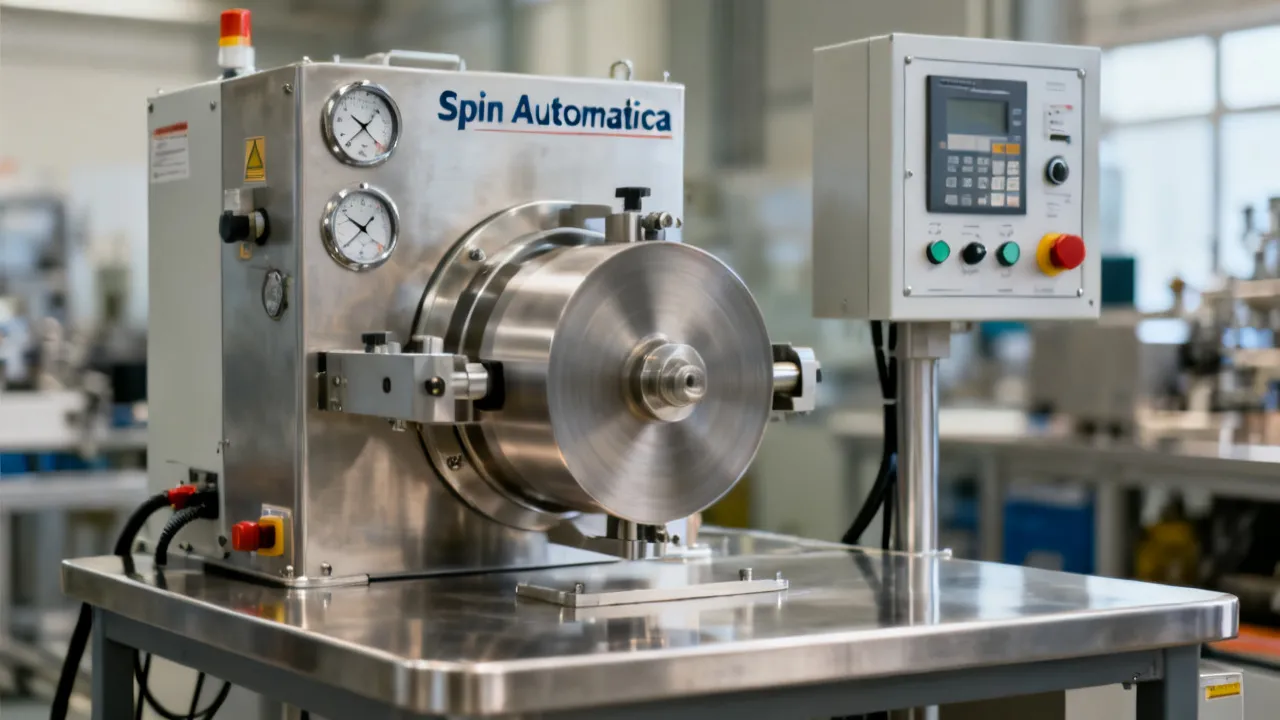
Spin Automatica is a specialized industrial system whose value depends on correct selection, stable operation, and dependable supply. This guide explains what “Spin Automatica” typically means in industrial contexts, how sourcing decisions affect performance, and what buyers should verify before purchase—covering compatibility, operating conditions, and maintenance planning with an objective, practical approach.
